
Get Healthy!
- Posted February 10, 2026
Brain-Training Game Linked To Lower Dementia Risk Decades Later
Imagine you’re driving down the street when, out of nowhere, a skateboarder rolls into your path.
You’re looking straight ahead, but can your brain spot the movement in your side vision fast enough for you to hit the brakes?
That split-second moment depends on something called visual processing speed, or how quickly your brain reacts to what’s happening around you, especially at the edges of your vision.
Now, a large long-term study -- published Feb. 9 in the journal Alzheimer’s & Dementia: Translational Research & Clinical Interventions -- suggests that training this skill with a brain game may do more than help with everyday tasks like driving. It may also help lower the risk of dementia years down the line.
Researchers found that older adults who practiced a type of brain training focused on visual speed were 25% less likely to develop Alzheimer’s disease or other forms of dementia, even 20 years later.
“It’s very surprising,” Marilyn Albert, director of the Johns Hopkins Alzheimer’s Disease Research Center, told NBC News. “It’s not at all what I would have expected.”
The type of training used in the study was first developed by psychologists Karlene Ball and Daniel Roenker, whose research helped shape what scientists now call speed training.
Their work later became the foundation for a brain exercise known today as Double Decision, which is available through the online brain-training platform BrainHQ.
Versions of this training have been tested for years in large studies, including the new ACTIVE trial.
Instead of asking people to memorize facts or solve word puzzles, speed training focuses on teaching the brain to see, process and react faster.
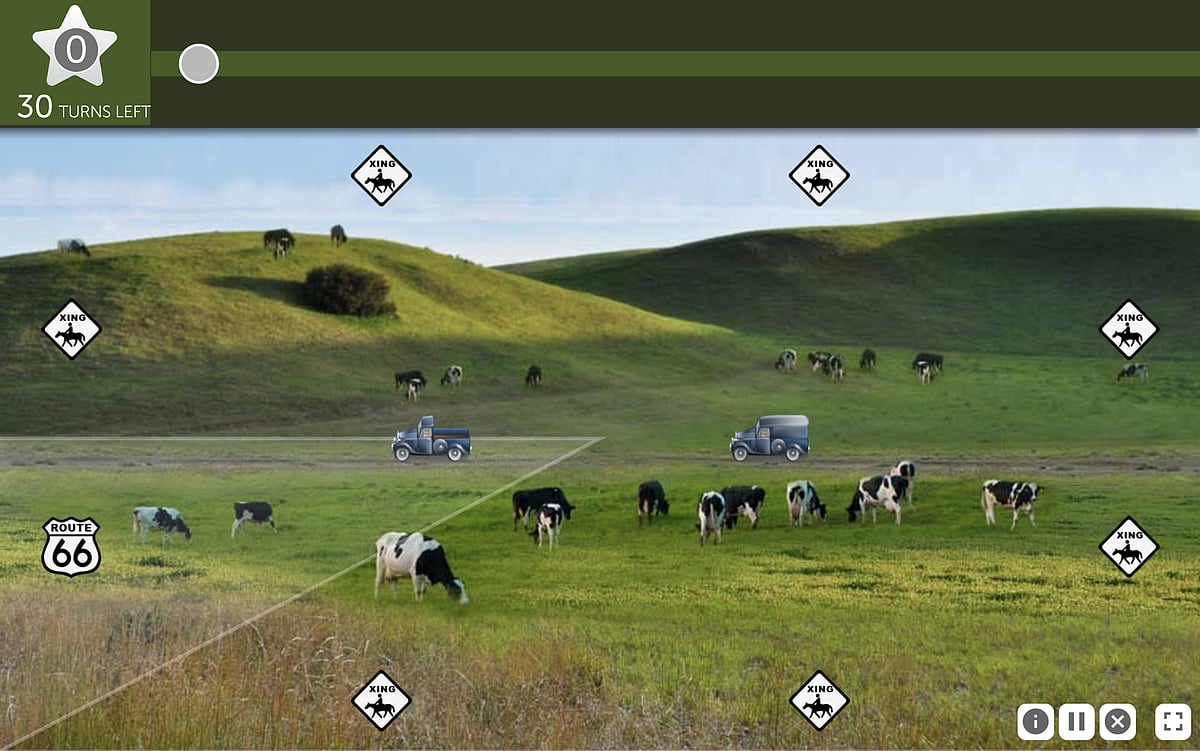
In a typical exercise, a person looks at the center of a screen and quickly decides between two images, such as which car appeared first. At the same time, they must notice where a road sign flashes briefly in their side vision.
Over time, the game gets harder:
The images appear faster.
The objects look more alike.
"Distractors" are added.
The side images move farther from the center.
The goal is to push the brain to process visual information faster and across a wider field of view.
It’s similar to what happens when we drive, Albert said.
“If we’re driving in a car and we have all these things going on in the periphery that we’re paying attention to, we have to decide what’s important and what’s not,” she added.
The trial, funded by the National Institutes of Health, followed nearly 3,000 people age 65 and older.
Participants were assigned to speed training, memory training, reasoning training or no training.
Those who completed speed training with booster sessions, up to 23 hours over three years, saw a benefit.
Dr. Thomas Wisniewski, director of cognitive neurology at NYU Langone Health in New York City, said it's the strongest evidence to date he has seen supporting the use of cognitive training.
Experts think speed training works because it builds implicit skills, the kind your brain learns deeply and retains, like riding a bike.
“Once the brain rewires for these skills, the change is durable even without continued practice,” said Dr. Sanjula Singh, a neurology instructor at Harvard Medical School. “A child can learn how to ride a bike in about 10 hours, and afterwards that learning lasts a lifetime.”
Researchers also note that speed training constantly adjusts to a person’s performance.
Still, experts stress that brain training is not a cure-all.
“Anyone with a brain is at risk of Alzheimer’s and everyone out there should be paying attention to their brain health,” Dr. Richard Isaacson, a preventive neurologist, said.
More information
The Alzheimer's Society has more on brain training and dementia.
SOURCES: NBC News, Feb. 9, 2026; BrainHQ


